
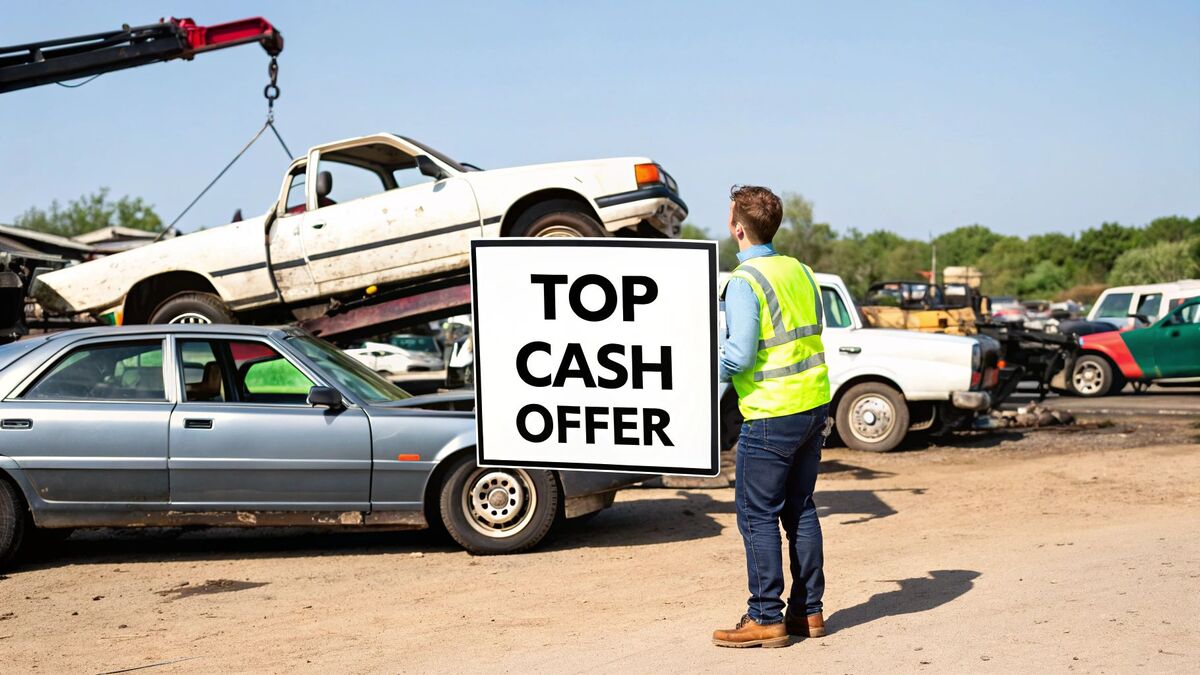
Figuring out what to do with that old car sitting in your driveway can be a real headache. Selling it to a car wrecker is often the fastest and easiest way to turn that old clunker into cash, especially if it's no longer roadworthy.
Is Selling to a Wrecker Your Best Move?
Not every car is a candidate for a private sale or a dealership trade-in. Sometimes the most practical and profitable move is to sell it straight to a wrecker. You'll know it's time to call one when:
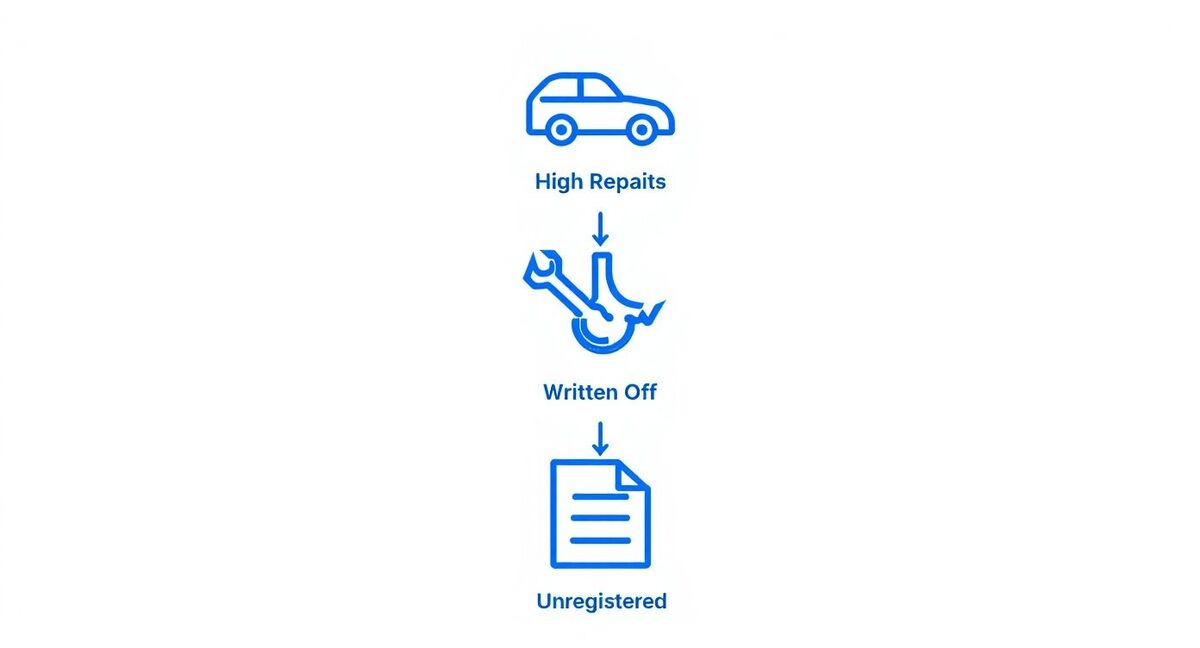
- Sky-high repair costs: the mechanic's quote is more than the car is worth — you're better off selling it for parts and scrap value.
- Written-off by insurance: a wrecker can still pay for the salvageable components and remaining metal.
- No rego, no roadworthy: wreckers buy it as-is, saving you the time and cost of getting it road-legal again.
The bottom line: if the time, money, and hassle of selling your car privately outweigh what you'd get for it, a wrecker offers instant cash with zero fuss.
It's a robust industry — the used auto parts market in Australia is worth around $1.3 billion, largely driven by independent wreckers.
Getting Your Car Ready for Pick-Up
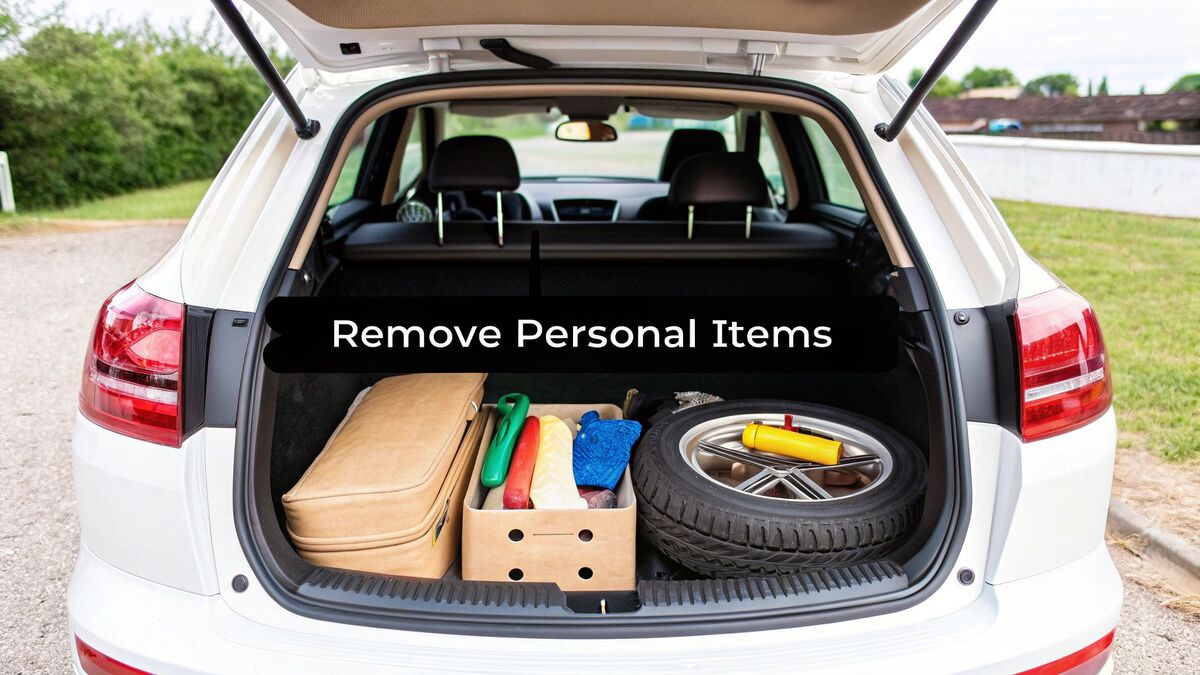
A little prep makes pick-up day painless. First, hunt for your personal belongings — once the car's at the yard, getting items back is next to impossible. Check these spots:
- Glove box & centre console — rego papers, receipts, headphones.
- Under the seats — slide them forward and back.
- Boot & spare tyre well — toolkits, jumper cables.
- Door & seatback pockets — small personal items.
When you cancel your registration in South Australia, you can often get a refund for the unused part of it. It's worth contacting Service SA to see what you're entitled to.
Finally, think about aftermarket parts — a top-of-the-line stereo, custom wheels, or a quality roof rack will earn far more sold privately. Swap back the original factory parts if you still have them. If that describes your car, this is the route most Adelaide owners take — see auto wreckers in Adelaide.
Getting the Best Cash Offer for Your Car
Getting the best price isn't luck — it's preparation and a little competition. Have this ready before you call:
- Make, model, and year.
- Vehicle Identification Number (VIN) — tells them the exact factory specs.
- An honest condition report — missing engine or gearbox? Significant body damage? Being upfront prevents price-knocking on pickup day.
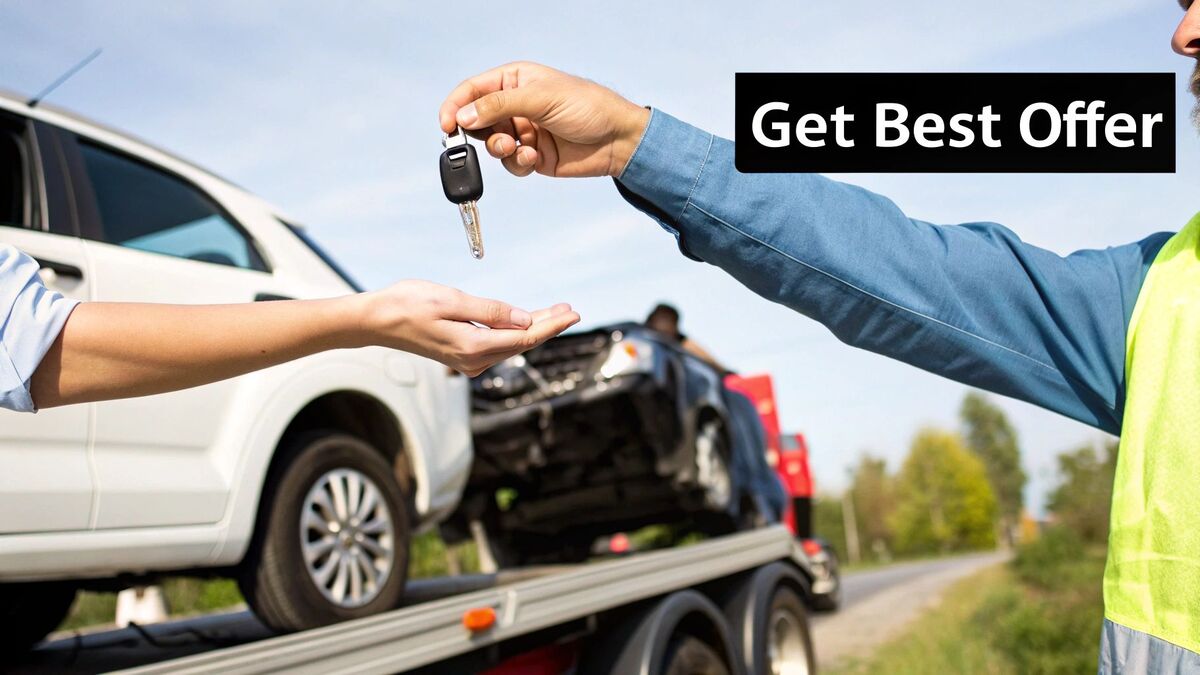
Don't just call the first wrecker you find — ring at least three local businesses to put pressure on them to offer a competitive price. What you are offered leans heavily on the badge on the bonnet — see the brands we buy in Adelaide.
Always confirm if the price they've quoted includes free towing. Some shadier operators give you a great-sounding number over the phone, only to subtract a hefty towing fee on arrival.
The most valuable parts are the big-ticket items: engines and transmissions (the market for good second-hand units is booming), catalytic converters (precious metals), and alternators and starter motors. If your engine was running well or the transmission is in good nick, mention it — it can give your quote a nice bump.
Finalising the Sale: Sorting Out the Paperwork
Getting the paperwork right is what officially gets the car out of your name and protects you from future headaches like someone else's parking fines. Have these ready for the tow truck driver:
- Proof of ownership — usually the registration certificate (the original purchase receipt can sometimes work too).
- Valid photo ID — a driver's licence or proof-of-age card.
Your most important job is to lodge a Notice of Disposal. This officially tells your state's transport authority you've sold the car, which is crucial for avoiding future liability.
Most states let you lodge it online in about five minutes — the final action that closes the loop.
What Really Happens at the Wrecking Yard
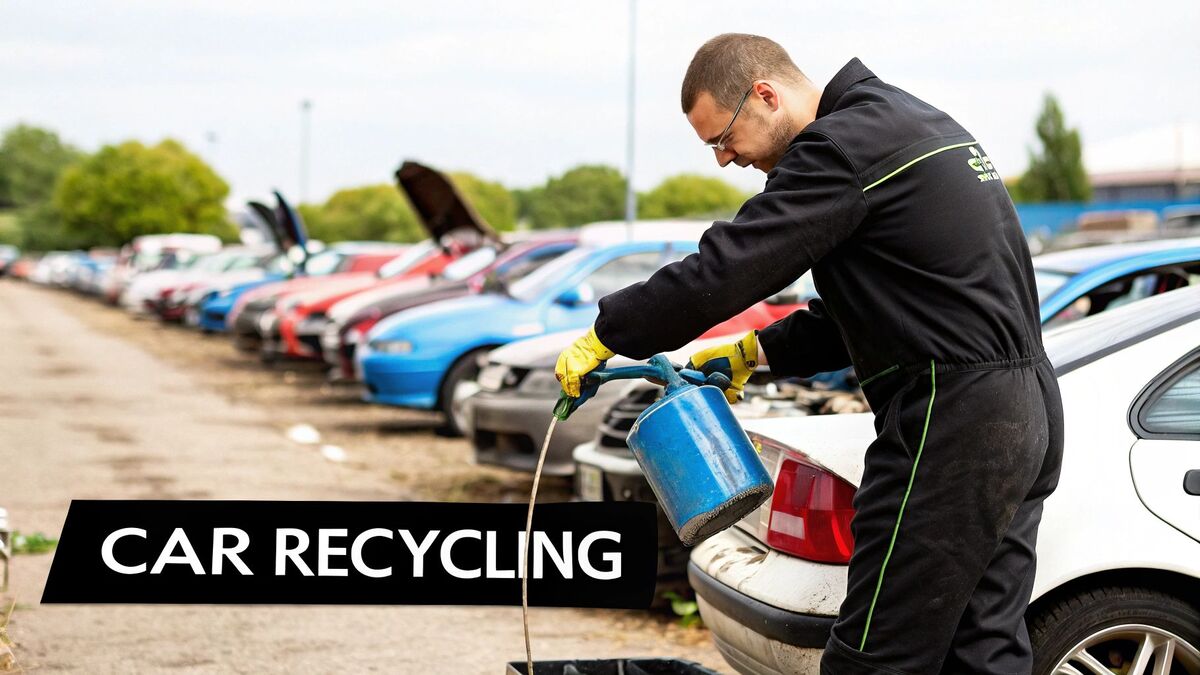
Selling your car to a wrecker kicks off a surprisingly eco-friendly recycling process. The first job is to make the car environmentally safe — draining engine oil, coolant, petrol and brake fluid for proper disposal. Then mechanics remove the parts still in good nick and in demand:
- Engines and transmissions that still run well
- Alternators, starter motors, and other key electrical parts
- Straight, rust-free body panels — doors, bonnets, guards
- Headlights, taillights, and mirrors without damage
Every salvaged part is checked, cleaned, catalogued and resold as affordable spares. What's left — the empty metal shell — is crushed and sent to a metal recycling facility. These days, more than 80% of a car's weight is recyclable. Around Adelaide, that is usually a job for cash for cars in Adelaide.
How a Wrecker Actually Values Your Car
A wrecker's offer is built from three separate calculations, and understanding them tells you where your negotiating room is.
- Parts demand. How many of your make and model are on Adelaide roads, and what components are people currently searching for? A ten-year-old Hilux has a queue of buyers for its tray, diff and headlights. A rare import has almost none.
- Salvage condition. Does the engine turn over? Is the gearbox intact? Are the panels straight on at least one side? Each answer either adds a resellable item or moves that mass into the scrap column.
- Scrap weight. Whatever cannot be resold gets valued as metal, at that week's rate.
This is why two cars of the same age can attract very different offers, and why being specific about what still works is the single easiest way to lift your quote.
Why So Many Owners Choose a Wrecker Over a Private Sale
A private sale can pay more on paper, but it assumes a roadworthy, presentable car and a buyer willing to take on its history. Once a vehicle needs more in repairs than it is worth, the calculation flips. Selling to a wrecker means one phone call, one price, one pickup and no strangers turning up to test drive a car you no longer trust.
There is an environmental side too. A licensed wrecker depollutes the vehicle properly — draining fuel, oil, coolant, brake fluid and refrigerant, and removing the battery and airbags — before anything is dismantled. Around 80–90% of the car by weight is then recovered as reusable parts or recycled metal. Abandoning a car on a verge or leaving it to rot on a property does the opposite, and in South Australia it can attract a fine for illegal dumping.
Comparing Quotes and Negotiating Properly
Ring three yards, give each of them exactly the same information, and write the numbers down. Any buyer who quotes without asking about the engine, the converter or whether the car is complete is not quoting seriously.
Ask one question of every buyer: "Is that figure guaranteed on arrival, with free towing included?" The answer sorts the market very quickly.
If one offer is genuinely higher, say so. Most yards will match a legitimate competing quote rather than lose the car. What they will not do is bid against a number you have invented, so keep it honest.
Mistakes That Cost People Money
- Removing parts first. Every item you pull off reduces the offer by more than you will make selling it, unless you already have a buyer.
- Leaving the plates on. Take them off before the truck arrives and return them, or the registration can stay attached to you.
- Not lodging the disposal notice. Until Service SA is notified, the car is legally still yours — along with any fines or tolls it collects.
- Cancelling insurance too early. Wait until the car is physically gone.
Still Have a Few Questions?
What if I can't find my rego papers?
Don't panic — you can still sell the car. You'll need some other form of proof of ownership (an old registration certificate or a bill of sale) paired with your photo ID. Just be upfront when you call for a quote and ask what they require. Our guide to how to find a wrecker near you covers the next step in more depth.
Does my car need to be drivable, or even roll?
No. Wreckers specialise in end-of-life vehicles and will have a tow truck ready to handle cars in any condition. They're not buying it to drive it — the value is in the scrap metal and salvageable parts.
How long does this whole thing take?
From the first phone call to a firm quote and locked-in pickup, the deal can often be sorted in less than 24 hours. The removal and payment are usually done in under 30 minutes. The fastest way to find out what yours is worth is to call 08 7113 2722 or request a no-obligation quote with the make, model and rough condition.
What if I have lost the keys?
Not a problem. A tow truck winches the car on regardless, and a missing key has almost no effect on the offer for an end-of-life vehicle. Mention it when you book so the driver brings the right gear.
What if my car is missing parts?
Still saleable. Tell us what is missing — particularly the engine, gearbox or catalytic converter — and the quote will reflect it accurately rather than being revised on your driveway.
What happens to my car afterwards?
It is depolluted, stripped of every resellable component, and the remaining shell is baled and sent to a shredder where the steel, aluminium and copper are separated and sold back into manufacturing. There is more on that in our guide to how automotive parts recycling works.
We offer competitive cash prices with on-the-spot payment and free towing anywhere in Adelaide.